Home » Laminate Veneers
Laminate veneers are planned for visible front teeth when small changes in shape, shade and alignment can create a cleaner, more balanced smile.
It is a face-matched result with controlled brightness, natural translucency and elegant proportions. A veneer case that looks obviously like veneers has been planned badly, not planned well.
A laminate veneer is a thin porcelain shell bonded to the front surface of a tooth. Because it covers the visible face rather than the whole tooth, it needs far less preparation than a crown — which is the point of the treatment. The natural tooth underneath stays largely intact, and the ceramic does the aesthetic work.
That thinness is also the constraint. A laminate veneer relies on healthy enamel to bond to and on a stable bite to survive. Where the tooth is weak, heavily restored or under heavy grinding load, a different treatment is the honest answer.
Healthy enamel is preserved as much as the case allows.
Shade and ceramic depth are planned to avoid a flat opaque look.
Length, edge shape and symmetry are designed around the face.
This is the decision that matters most, and it is decided by the condition of the tooth rather than by the look you want.
|
|
Laminate veneer
|
Crown
|
|---|---|---|
|
Coverage
|
Front surface of the tooth only
|
The whole tooth
|
|
Preparation
|
Minimal — healthy enamel largely preserved
|
Substantial — the tooth is reshaped all round
|
|
Used when
|
The tooth is structurally sound and the goal is appearance
|
The tooth needs structural protection as well
|
|
Typical cases
|
Front-tooth discolouration, small gaps, shape concerns
|
Cracked, worn, heavily filled or root-treated teeth
|
|
Read more
|
This page
|
Dental Crowns →
|
If your tooth is sound, a veneer is the more conservative treatment and we will recommend it — even though a crown case is worth more. Removing healthy tooth structure that did not need removing cannot be undone.
|
|
Standard plan
|
Advanced plan
|
|---|---|---|
|
Tooth structure
|
Healthy enamel supports conservative veneers
|
Weaker teeth may need crowns
|
|
Aesthetic goal
|
Subtle colour and shape refinement
|
Broader restorative change
|
|
Bite
|
Stable contacts support longevity
|
Grinding may need splint planning
|
|
Material choice
|
Thin laminate porcelain
|
E-max or zirconium alternative
|
|
Decision point
|
When enamel retention is enough
|
When strength or masking matters more
|
Laminate veneers work best when the teeth are structurally suitable and the goal is natural refinement, not heavy coverage.
PATIENT CASE
Sophie — refinement rather than replacement
The treatment followed four stages:
Outcome
Sophie achieved a brighter, more even front-tooth appearance while keeping the smile soft, natural and face-appropriate.
[Before launch: confirm whether this is a real patient with written consent on file, or an illustrative composite. If illustrative, it must be labelled as such on the page.]
Veneers are strong for what they are, but they are thin ceramic bonded to enamel. How long they last depends on the mouth they are placed into.
[To be supplied by the clinic: the porcelain system used for laminate veneers, whether a specific option is offered, the guarantee period, and lab turnaround. Name the system — a patient comparing clinics can look it up, and a named material reads as a clinical decision rather than a sales term.]
A typical veneer journey for an international patient. Exact durations depend on your case and are confirmed in your written plan.
|
Stage
|
What happens
|
|---|---|
|
Before travel
|
Online consultation, smile photos reviewed, shade and shape goals discussed, written plan and quote, travel coordinated.
|
|
Day 1
|
Smile analysis, digital design, minimal preparation where needed, impressions or scans, temporaries fitted.
|
|
Lab stage
[X days] |
Veneers are produced. [Clinic to state whether the lab is in-house — in-house lab may shorten this stage.]
|
|
Try-in
|
Shape, shade and fit checked and adjusted before anything is bonded permanently.
|
|
Bonding
|
Veneers permanently bonded, bite checked, aftercare guidance given.
|
|
Total stay
[X days] |
[Clinic to confirm the typical number of days for a veneer case.]
|
Dental treatment in Turkey offers up to 70% savings compared with Europe and the USA while providing world-class quality. Veneers are priced per tooth, so the total depends on how many teeth are in your smile line.
|
Treatment
|
Typical UK price
|
Dentoper Antalya
|
|---|---|---|
|
Laminate veneer (per tooth)
|
[to be supplied]
|
[to be supplied]
|
|
6 upper front teeth
|
[to be supplied]
|
[to be supplied]
|
|
8 upper front teeth
|
[to be supplied]
|
[to be supplied]
|
|
Night guard
|
[to be supplied]
|
[to be supplied]
|
Many patients think in terms of “how many teeth show when I smile”, so quoting by 6, 8 or 10 teeth is more useful than a per-tooth figure alone.
That look — uniformly bright, opaque, oversized, all one shade — comes from aggressive preparation and a shade chosen from a catalogue rather than from a face. It is a planning failure, not a nationality. Our approach is the opposite: conservative preparation, shade and ceramic depth planned to avoid a flat opaque look, and length, edge shape and symmetry designed around your face. Ask to see natural-looking cases before you book anywhere — any clinic confident in its work will show them.
As little as the case allows. Laminate veneers are intended to preserve healthy enamel, and some cases need only minimal surface preparation. The exact amount depends on alignment, shade and the final design.
If the tooth is structurally sound and the goal is appearance, veneers are generally the more conservative option. Crowns are used where the tooth also needs structural protection. The condition of the tooth decides — not simply the look you prefer.
Small alignment issues can often be improved visually with veneers. More significant crowding or bite problems may be better treated orthodontically first. Trying to hide a major alignment problem with excessive tooth preparation is not a conservative plan.
Shade is a design choice, but brighter is not automatically better. The goal is to choose a shade that works with your skin tone, face and remaining natural teeth while still looking clean and refined.
Longevity depends on bite balance, grinding, gum health, hygiene and maintenance. Well-planned veneers can last many years, but thin ceramic placed into an unmanaged heavy bite will not perform as well.
Yes. An individual veneer can usually be remade without replacing the others, provided the underlying tooth remains healthy.
Possibly, but the grinding has to be managed. A night guard may be part of the treatment plan, and severe grinding may make a different restorative option safer.
Every case below is published with the patient’s written consent.
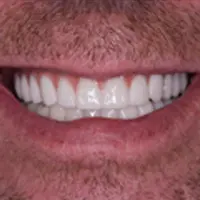
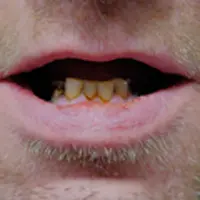
Zirconium Crown Smile Makeover 20 Crowns · 2 Clinic Visits · Completed in 6 Days
Laminate Veneers · 16 Veneers · 2 Clinic Visits · Completed in 5 Days
Full-Arch Implant Treatment · All-on-6 · Treatment Completed in 2 Stages
Choose these images carefully. On this page in particular, a natural, believable result persuades far more than a dramatic one. Cases that look like veneers confirm the exact fear a UK patient arrives with.